
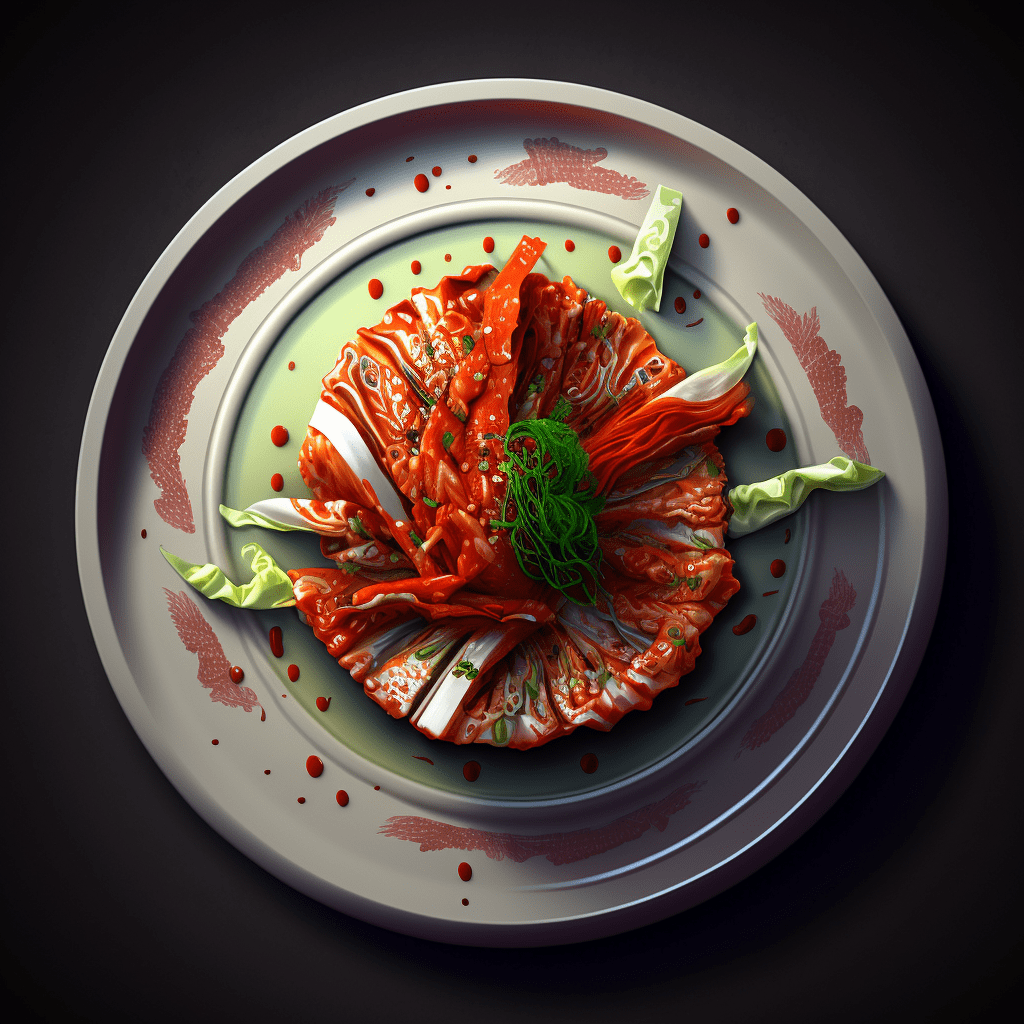
Ingredients:
- 1 medium-sized napa cabbage
- 1/2 cup coarse sea salt
- 8-10 cloves garlic, minced
- 1 thumb-sized piece of fresh ginger, minced
- 1/2 cup Korean red pepper flakes (gochugaru)
- 3 tablespoons fish sauce
- 2 tablespoons Korean salted shrimp (saeujeot), minced
- 1/4 cup sugar
- 4-5 green onions, chopped
- 1/2 cup radish or daikon, julienned
Instructions:
- Cut the napa cabbage into quarters lengthwise, then rinse thoroughly under cold water to remove any dirt or debris. Place the cabbage in a large mixing bowl and sprinkle each leaf generously with coarse sea salt. Let it sit for 2-3 hours, flipping the cabbage over occasionally to ensure even salting. This will help draw out excess moisture from the cabbage.
- While the cabbage is salting, prepare the kimchi paste. In a separate bowl, combine minced garlic, minced ginger, Korean red pepper flakes, fish sauce, salted shrimp, and sugar. Mix well to form a thick, smooth paste.
- After the cabbage has wilted and released its excess moisture, rinse it thoroughly under cold water to remove the salt. Gently squeeze out any remaining water from the cabbage leaves.
- Using your hands or a brush, spread the kimchi paste onto each leaf of the cabbage, making sure to coat both sides. You can also add the chopped green onions and julienned radish between the layers of cabbage as you go.
- Once all the cabbage leaves are coated with the kimchi paste, carefully stack them in an airtight container or glass jar, pressing down firmly to remove any air bubbles. Leave about an inch of headspace at the top of the container as the kimchi will expand during fermentation.
- Seal the container tightly and let the kimchi ferment at room temperature for 1-2 days, then transfer it to the refrigerator. The longer you let it ferment, the more tangy and flavorful it will become. It’s best to wait at least a week before consuming, but you can start enjoying it after a couple of days.
- Kimchi can be stored in the refrigerator for several weeks to several months, and the flavor will continue to develop over time. Enjoy it as a side dish, in stews, stir-fries, or on top of rice or noodles!
The fermentation process can produce gas, so make sure to open the container or jar daily during the initial fermentation period to release any built-up pressure. Also, be sure to use clean utensils when handling the kimchi to avoid contaminating it with bacteria.
 Tasty trandy food
Leave a comment